Why Keys Snap and What Happens Inside the Lock
Keys are subjected to repeated torsional stress every time they are turned, especially in ignition cylinders where the torque load is higher than in a door lock. Over time, micro-fractures develop near the bow or along the blade at points where the key bends slightly under turning force. Cold mornings along the Pacific coast, like those that roll into San Juan Capistrano off the ocean in winter, make metal more brittle and accelerate that fatigue process. Add a worn key that no longer aligns cleanly with the lock's wafer or pin stack, and the conditions for a clean snap are set. The break usually happens at the worst possible moment — when the driver applies just a bit too much force because the cylinder feels stiff.
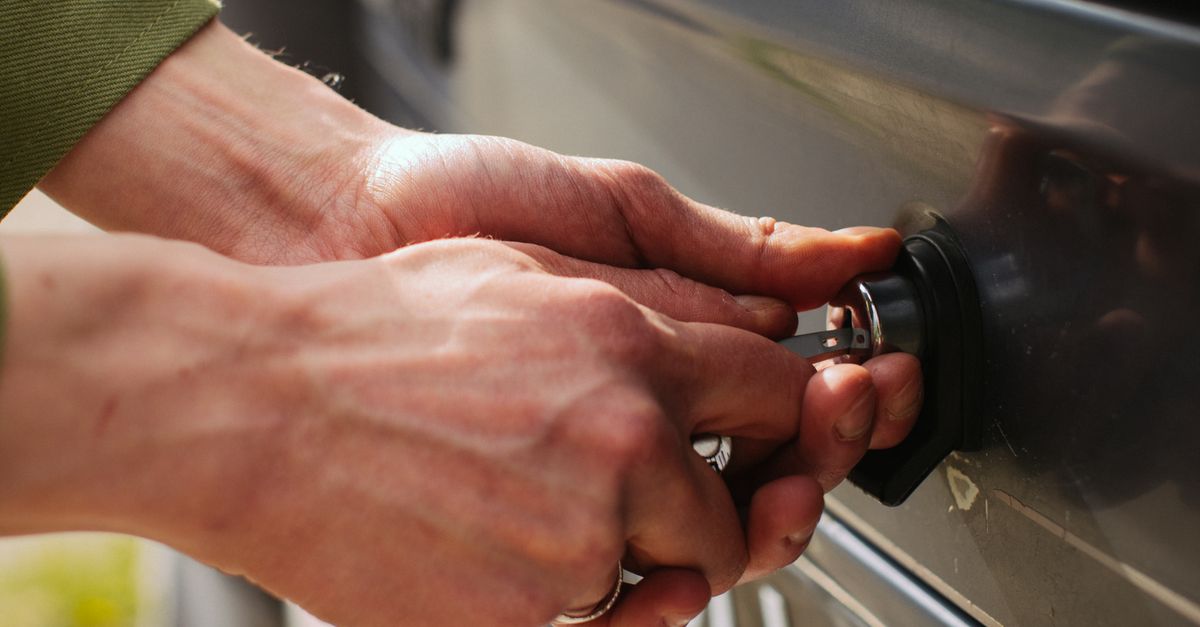
Once the blade breaks, the fragment typically lodges inside the plug of the lock cylinder. In a door lock the fragment sits between the wafers; in an ignition it is surrounded by spring-loaded pins. Attempting to grip it with pliers, tweezers, or a bobby pin almost always compresses the wafer stack further or rotates the plug slightly, making extraction dramatically harder. In a mortise lock cylinder — the type found on some European and luxury vehicles as well as many commercial doors — the internal geometry is even more complex, and an incorrect extraction attempt can crack the cylinder housing entirely. Professional extraction tools — needle-nose picks, broken-key extractors with hooked tips, and plug followers — are designed specifically for these internal geometries, which is why calling a trained technician is always the right first move.